
Introduction
Every parent knows that sinking feeling at 2 am when a child feels hot and will not settle. Most of the time it turns out to be something small. Still, knowing the common childhood illnesses, what they look like and how to lower the risk can turn panic into a plan. This blog goes through the usual childhood diseases seen in India, the warning signs you should never ignore, and the simple habits that protect your child at home. It is written in plain words, for tired parents who just want straight answers. Bookmark it for those nights.
What Are Common Childhood Diseases?
Common childhood diseases are the illnesses children get again and again, mostly because their body is still learning to fight germs. A young child's defence system is new. Add crowded classrooms, shared toys and sticky hands, and germs travel fast. Most of them are mild and pass in a few days with rest and fluids. A few are serious, and those are the ones where early care matters. Doctors group the common pediatric diseases by what they affect, like the lungs, the stomach or the skin, and by what causes them, such as a virus or bacteria.
Pediatric Diseases List: Common Childhood Illnesses by Type
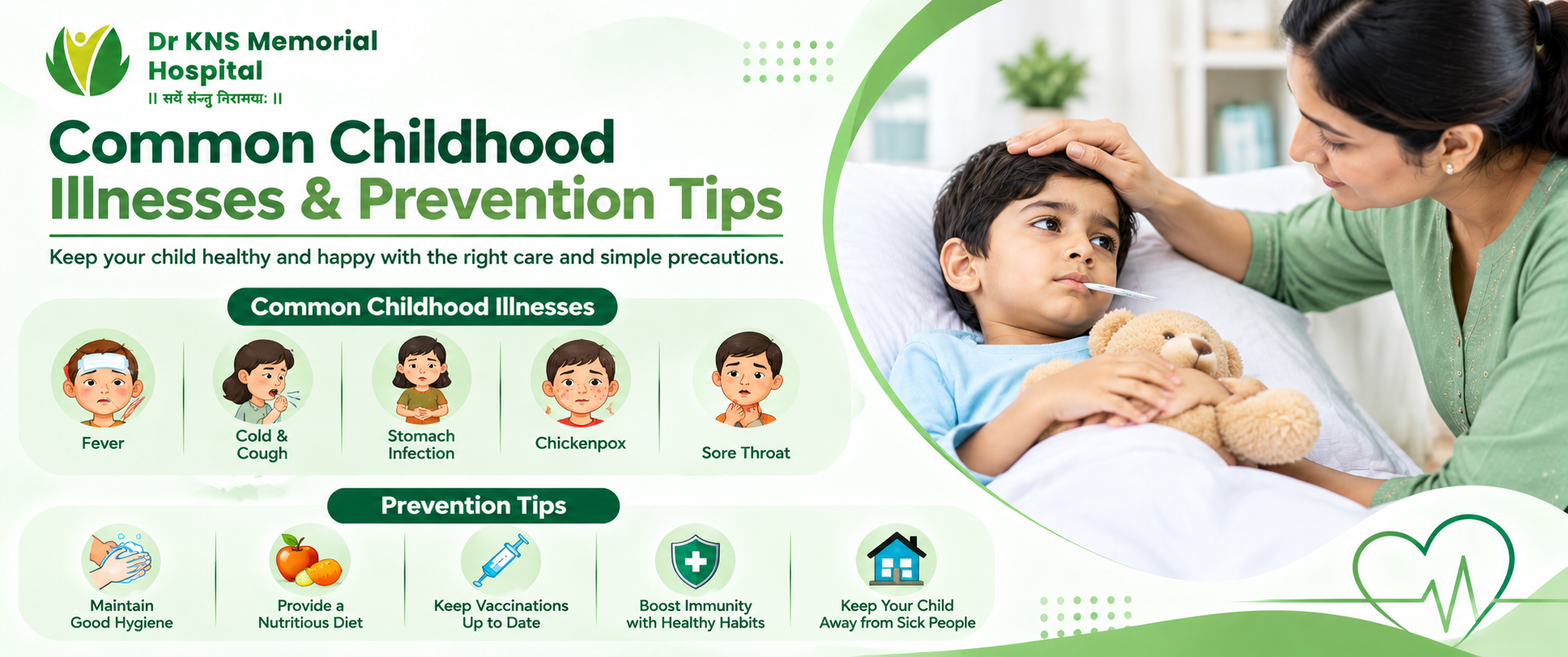
Here is a simple list, sorted by type, so you know what each problem usually looks like. Think of it as a childhood diseases list for everyday parents.
Respiratory Infections (Cold, Flu, Pneumonia):
Colds, flu and pneumonia are among the most common childhood illnesses. A cold brings a runny nose, sneezing and a mild cough. Flu hits harder, with fever, body ache and tiredness. Pneumonia is more serious. Watch for fast or noisy breathing, the chest pulling in with each breath, and a child too weak to feed or play. Antibiotics do not work on colds or flu, so please do not give them without a doctor's advice. Rest, warm fluids and a clear nose help most mild cases.
Digestive Illnesses (Diarrhea, Stomach Infections):
Diarrhea and stomach infections are childhood diseases that spread through dirty water, unwashed hands and stale food. The real danger is not the loose motion but the water loss that follows. Give ORS in small, frequent sips, and keep breastfeeding or feeding your child. Dry lips, sunken eyes, no tears and very little urine mean dehydration, and your child needs a doctor soon. Vomiting that will not stop, or blood in the stool, needs a check too.
Viral Infections (Measles, Chickenpox, Mumps):
Measles, chickenpox and mumps are viral pediatric diseases that spread easily between children. Measles starts with fever, cough, red watery eyes and then a rash. Chickenpox brings itchy, fluid filled blisters. Mumps show up as painful swelling of the cheeks below the ears. None of them has a quick cure, so treatment is about comfort and watching for complications, which can be serious. The good part is that vaccines can prevent all three. Talk to your doctor about suitable medication to reduce a child’s temperature. Keep a sick child away from school, and from babies and pregnant women, until the doctor says it is safe.
Skin Conditions & Other Infections:
Rashes, ringworm, scabies, boils and heat rash are common in children, especially in humid months. Ringworm shows as a round, scaly patch. Scabies causes strong itching, mostly at night. Most skin problems are easy to treat once identified, but random creams, especially steroid creams, can make them worse. Keep nails short, wash bedding in hot water for scabies, and show any rash that spreads or comes with fever to your doctor.
Kids Symptoms Parents Should Never Ignore
You know your child best, and a small change in mood is often the first clue. Here is what to watch for, and what needs quick action.
Early Signs of Kids Sickness:
Before a fever or rash shows up, children often just act differently. They get cranky, clingy, sleepy, or refuse their favourite food. They may pull at an ear or rub their eyes. Keep an eye out for cough, runny nose, loose motions, vomiting, or fewer wet diapers. Some of these can be insignificant in isolation. A few together, or symptoms that get worse over two to three days, are a reason to call your doctor.
Emergency Red Flags That Need Immediate Care:
Go to the hospital straight away if you see any of these:
- Trouble breathing, fast breathing or blue lips
- A seizure or fit
- Extreme sleepiness, limpness and/or difficulty in waking.
- A temperature in babies less than 3 months old.
- Rigid neck and/or a non-blanching rash.
- Dehydration and/or persistent vomiting.
- Severe pain, or refusing all drinks
Do not wait for morning. Trust your gut.
Prevention Tips for Common Childhood Illnesses
Good news first. Many of these illnesses can be prevented, or at least made milder. These habits work for most childhood problems, and none of them is difficult.
Keep Vaccinations on Schedule:
Vaccines are the strongest shield you have. They protect against serious childhood diseases such as measles, polio, hepatitis B and rotavirus, a common cause of severe diarrhea. Follow the immunisation schedule your pediatrician gives you, and do not skip a dose just because your child looks healthy. If one is missed, there is usually no need to start over, so ask your doctor about catching up. Keep the vaccination card safe too, since schools and hospitals often ask for it.
Build Strong Hygiene Habits:
Washing hands with soap and water for at least 20 seconds can cut down common pediatric diseases and does more than most medicines. Teach your child to wash before eating, after the toilet and after playing outside. Show them how to cough into the elbow. Keep nails short and toys clean. Make it a game or a song, because kids copy what they enjoy.
Focus on Nutrition and Sleep:
A well fed, well rested child fights germs better. Breastfeed exclusively for the first six months, then add soft home cooked food like dal, vegetables, fruit, eggs or curd. Reduce consumption of processed food and sweetened drinks. School age children need around 9 to 12 hours of sleep. Missing sleep or meals makes every childhood illness harder to shake off.
Create a Safe, Clean Environment:
Give your child clean drinking water, boiled or filtered. Cover food and wash fruit and vegetables. Use nets or repellents against mosquitoes. Keep the home smoke free, because tobacco smoke irritates little lungs. Clean shared toys and surfaces often, and let fresh air in. Wash your own hands before feeding a baby.
When to Consult Dr KNSM Hospital
Home care is fine for mild coughs and colds. But book a visit if fever lasts more than two to three days, if your child eats or drinks less than usual, if symptoms keep returning, or if you simply feel something is off. At Dr KNSM Hospital, the team can examine your child, find the cause and guide you on treatment and prevention of pediatric diseases. Your questions are welcome, even small ones. For sudden breathing trouble, a fit, or a very sleepy child, come straight to the emergency department.
Conclusion: Protecting Your Child’s Health
Children will get sick. It is part of growing up, and each cold or fever teaches their body something. What you can control is how ready you are. Know the common childhood illnesses, watch for the signs that matter, keep vaccines and hygiene on track, and ask for help early. If you are worried about your child's health, Dr KNSM Hospital is here to guide you. A calm parent and a timely consultation make the biggest difference.
FAQ
Common childhood diseases are illnesses that children get often, because their body is still learning to fight germs. Colds, flu, diarrhea, measles, chickenpox, mumps and skin infections are the usual ones. Most are mild and pass in a few days with rest and fluids.
A young child's defence system is still new. Crowded classrooms, shared toys and unwashed hands help germs spread fast. Falling sick often is common in the early years, and each childhood illness helps the body learn. Seek advice if the same problem keeps returning or does not settle.
A simple pediatric disease list groups problems by type. Respiratory ones include cold, flu and pneumonia. Digestive ones include diarrhea and stomach infections. Viral ones include measles, chickenpox and mumps, and there are also skin problems like ringworm and scabies.
Vaccines protect against several serious childhood diseases, such as measles, mumps, polio, hepatitis B and rotavirus, a common cause of severe diarrhea. Chickenpox can also be prevented. Follow the schedule your pediatrician gives you, and keep the vaccination card safe.
Common childhood illnesses here include colds, cough, fever, diarrhea, stomach infections, skin problems and viral infections like measles and chickenpox. Dirty water, humid weather and low vaccination can raise the risk. Clean water, hygiene and vaccines help a lot.
Watch for trouble breathing, fast breathing, blue lips, a seizure, extreme sleepiness, a stiff neck with fever, or a rash that does not fade when pressed. Any fever in a baby under 3 months also needs a doctor. These kids' symptoms need hospital care straight away.
Kids' sickness often shows up as a change in mood or habits before fever appears. Your child may be cranky, clingy, sleepy or refuse food. They may also have cough, loose motions, vomiting or fewer wet diapers. If it gets worse over two to three days, call your doctor.
Look for dry lips, sunken eyes, no tears and very little urine. Give ORS in small, frequent sips and keep feeding your child. If these signs appear or vomiting does not stop, see a doctor soon. Blood in the stool also needs a check.
Keep vaccines on time, wash hands with soap for at least 20 seconds, give clean boiled or filtered water, and feed home cooked food. Make sure your child sleeps well and keep the home smoke free. These simple habits cut down common pediatric diseases in everyday life.
Book a visit if fever lasts more than two to three days, your child eats or drinks less, symptoms keep coming back, or you feel something is off. Dr KNSM Hospital can examine your child and guide you on treatment and prevention of pediatric diseases. For breathing trouble or a fit, come straight to the emergency department.